Ubuntu 詳述桌面 AI 整合:可選、本地優先,私隱與安全從設計着手
Ubuntu Details AI Desktop Integration: "Optional, Local-First, Privacy and Security by Design"
Ubuntu 計劃在 Linux 桌面整合 AI,透過名為 warty 的統一入口,在用戶明確要求時連結應用程式、本地情境與智能協助。AI 功能採嚴格自選及本地優先方針,預設不附送模型,相關元件亦會以嚴格隔離方式執行。開發團隊預計於 2027 年 1 月展示更多整合內容,並提供可安裝版本。
Generative AI has been a touchy subject in the vocal open-source community, and one proposed solution by those trying to toe the line but still use AI has been local models, and it seems as though Ubuntu will be taking that same approach with its new AI integration on the Linux desktop. According to a new announcement, Ubuntu will also be implementing AI in almost an opposite way compared to how Microsoft handled it in Windows.
As Ubuntu's Didier Roche explains in the discussion post, Ubuntu will not be implementing AI on an app-by-app basis or by "scattering disconnected AI widgets across the desktop." Ubuntu's plan, instead, is to have a "unified, keyboard and speech-friendly entry point that bridges your apps, your local context, and smart assistance only when you explicitly ask for it." This will take the form of an app called warty, which features a UX similar to a typical launcher (like Krunner or the launcher in Gnome's Overview page).
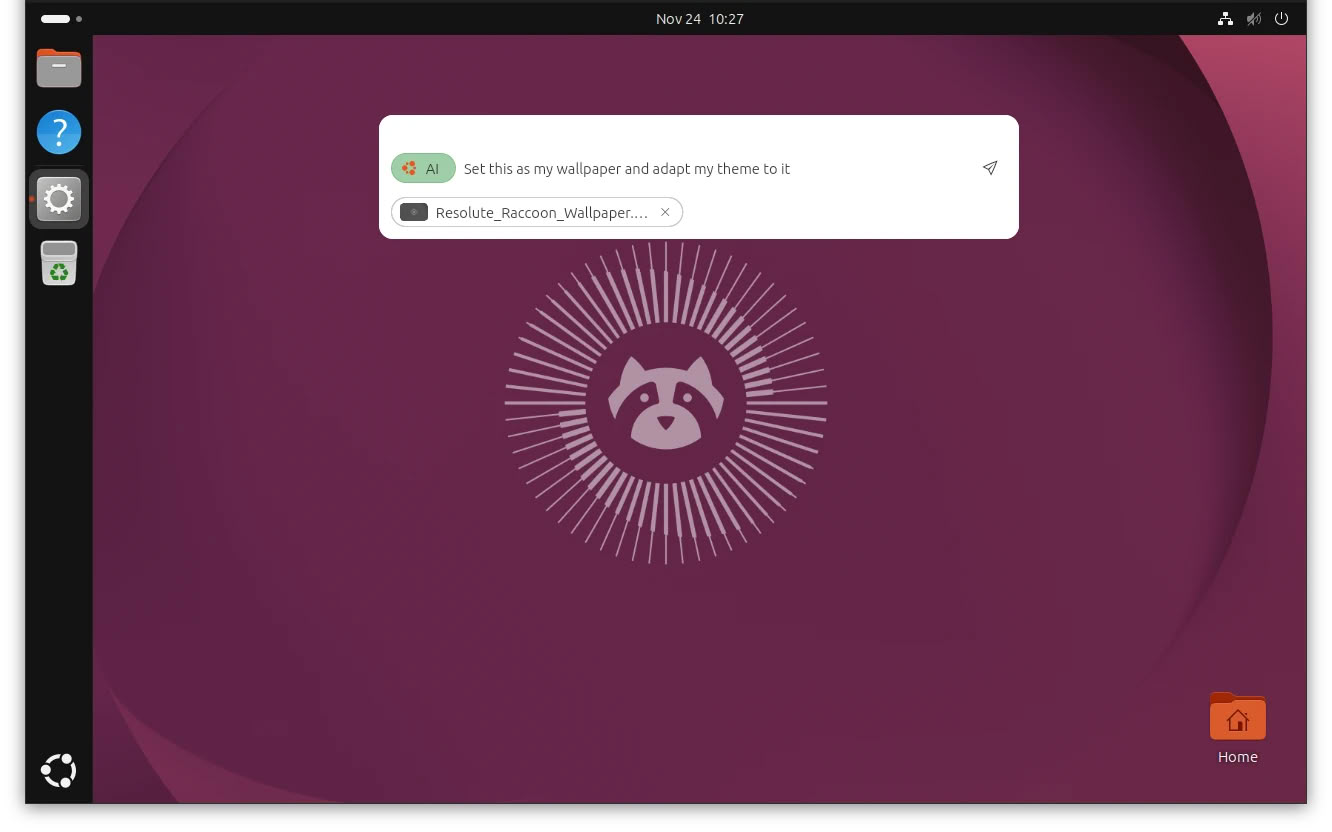
Roche also established four key principles for the development of Gnome's new AI interface:
- Strictly optional: It is your machine. All AI capabilities are strictly opt-in. If you want a pure, ultra-fast advanced launcher without enabling any AI features, that experience is first-class out of the box (and we aren't shipping gigabytes of models in the default install).
- Local-first: Our priority is on-device inference running against local models on your own hardware, rather than sending your queries to external cloud services by default.
- Privacy-first: Because processing happens locally, your files, local context, and daily habits stay where they belong: on your disk.
- Security-first: Leveraging Ubuntu's confinement and sandboxing architecture, the components powering these features are designed to run with strict isolation so that experimental or agentic capabilities cannot compromise your host system.
Judging by the wording, users will be able to use their own local AI models or connect Warty to a cloud AI provider, and it also sounds as though Ubuntu's default apps will all only have AI integrations through Warty, instead of Microsoft's mishmash of Copilot integrations throughout the Windows desktop. Ubuntu's dev team expects to be able to show off more of the AI integration in January 2027 alongside an installable version of the app.
來源:TechPowerUp · techpowerup.com