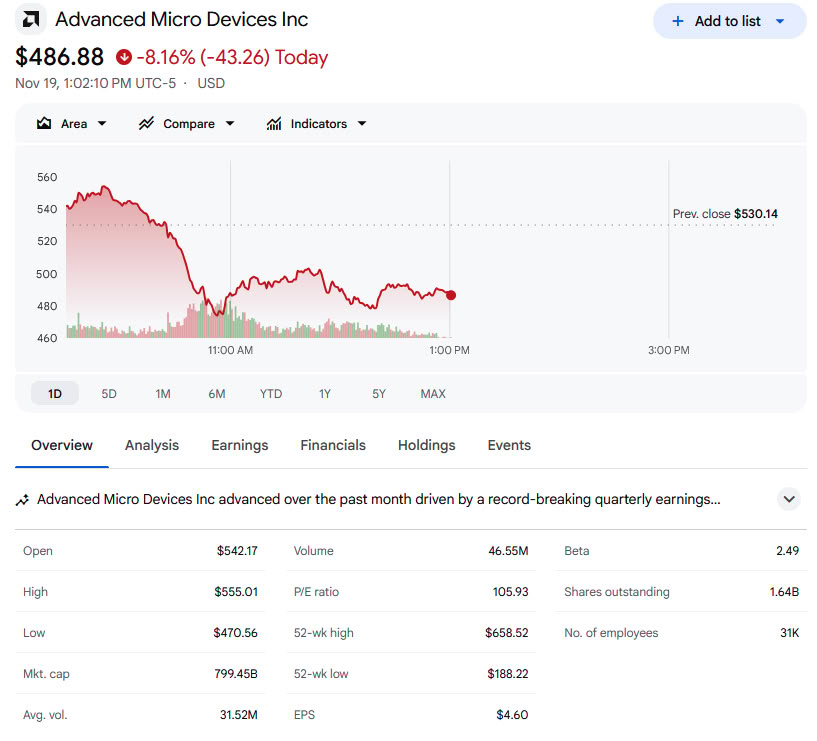
AMD 股價因 Hunterbrook Media 沽空報告中的出口管制指控一度急跌 15%,其後回升
AMD Stock Dives 15% Over Shortseller Report Alleging Export Control Violations to China, Rebounds Later
AMD 股價在 Hunterbrook Media 發佈報告後,曾於 30 分鐘內急跌 15%,其後回升;該機構披露持有 AMD 的沽空倉位,並指 AMD 涉嫌向中國出口受管制伺服器系統。報告稱,受美國出口管制的 IEIT Systems 自 2025 年 3 月起使用至少六個較新版本的 AMD 啟動韌體。報告同時指出,這些發現未必能證明受限制產品曾由 AMD 直接或間接轉交 IEIT。
The AMD stock briefly crashed 15% in 30 minutes after a report by market research firm Hunterbrook Media alleged that AMD "has its own China problem," alleging export control violations resembling those by NVIDIA, which cost CEO Jensen Huang his job. The firm disclosed that it holds a shorting position against the AMD stock. Unlike in NVIDIA's case which involved alleged smuggling of advanced AI GPUs to AI research and inferencing firms in China; AMD has a problem with improper exports of controlled server systems to a Chinese server builder placed on export controls by the U.S. Government, the report alleges.
It is very important to note here that the report itself says that these findings don't necessarily prove an export control violation—that restricted products were either directly or indirectly transferred from AMD to IEIT Systems—it only notes IEIT's server firmware implementing newer versions of AGESA microcode that it normally shouldn't have access to, given that it is no longer supposed to be doing business with AMD. AGESA isn't publicly available software, it is a software component that's encapsulated into system firmware by OEMs, and implementing it requires an OEM to be doing business with AMD and be subject to its terms of sale and other agreements. It's entirely possible that IEIT Systems obtained AGESA through illicit means, by sourcing it from bad actors within another OEM that's currently doing business with AMD, or IEIT's engineers "transplanted" it from finished-product firmware distributed by a lawful OEM.
The Hunterbrook report alleges that blacklisted Chinese server assembler, IEIT Systems incorporated at least six newer versions of AMD startup firmware since March 2025, with nearly identical code appearing in products from three non-blacklisted affiliates (Aivres, Kaytus, and Maginfra). The report also flags AMD's broader China exposure, noting it generated $67 million in 2025 licensing income from two blacklisted ventures, billed 22.4% of its 2025 revenue to China and Hong Kong, and relies heavily on Chinese joint ventures for chip assembly, alongside financial strain from over $33 billion in guarantees and up to 320 million shares in AI-customer stock obligations.
來源:TechPowerUp · techpowerup.com