ASUS Turbo Radeon AI PRO R9700 評測
ASUS Turbo Radeon AI PRO R9700 Review
ASUS Turbo Radeon AI PRO R9700 是一款面向工作站的 32GB GDDR6 顯示卡,售價低於 $2000,定位為 NVIDIA RTX PRO Blackwell 工作站顯示卡的較低成本替代選擇。它採用 RDNA 4 架構,FP8 峯值矩陣運算效能為 382.7 TFLOPS,板卡功耗為 300W,並支援最多在單一系統安裝四張。
While much of the attention in the market for AI inference has been focused on servers and datacenter-scale deployments, the heart and soul of the modern AI revolution started with video cards. And that is where it still beats on today, overshadowed by servers but still an important market segment overall.
Within the AMD ecosystem, the company has taken a very visible pivot in how it markets and categorizes its professional video cards. The Radeon Pro lineup, once the backbone of AMD’s workstation graphics efforts, has become the Radeon AI Pro lineup, and the backbone of AMD’s add-in video card/AI accelerator efforts. The flagship for this line, in turn, is the Radeon AI Pro R9700, a 32GB VRAM card that AMD and its partners are positioning as a more budget-friendly alternative to NVIDIA’s RTX PRO Blackwell lineup of workstation cards.
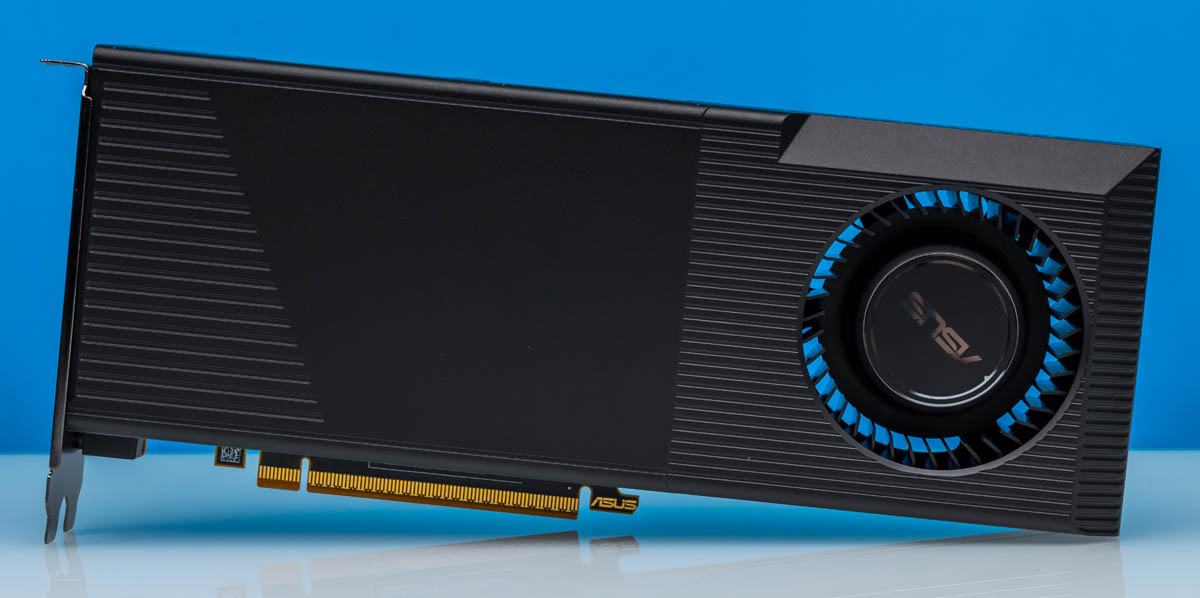
Today we are taking a look at one of those R9700 cards in the form of ASUS’s Turbo Radeon AI Pro R9700. The sub-$2000 card have been heavily optimized for workstation use, balancing graphics needs and display outputs with the ability to fit up to four cards into a single system for larger AI workloads.
ASUS Turbo Radeon AI PRO R9700 Hardware Overview
As AMD is not selling their own reference design workstation cards for this generation, it falls to AMD’s partners to sell the cards instead. Which is a production strategy that they are well-accustomed to on the consumer side of matters, but is a bit more unusual for a workstation card.
Notably, AMD has been keeping their Radeon Pro partners on a rather short leash with card designs. AMD is curating a very specific image for a very specific market here, not the least of which is the ability to install multiple cards in a single workstation. As a result, though AMD is not selling their reference card their partner cards are all quite similar in their high-level design as dual slot blowers, a form factor you will not readily find outside of workstation video cards these days.
That brings us to ASUS’s Turbo Radeon AI PRO R9700. ASUS has long been a heavyweight in the world of video cards, so it is no surprise to see them jump on board producing a Radeon Pro card.

ASUS’s R9700 card is, in all practical application, exactly what you would expect from a workstation card given the form factor and the AMD’s constraints. This is a dual slot video card that follows the PCIe specifications to a T in terms of width and height, in order to ensure that it (and perhaps a few of its friends) can fit into a workstation chassis.
| ASUS Turbo Radeon AI R9700 Specifications | |||
| CUs | 64 | ||
| AI Accelerators | 128 | ||
| GPU Boost Clockspeed | 2.92GHz | ||
| Peak Matrix Throughput (FP8) | 382.7 TFLOPS | ||
| Peak Vector Throughput (FP32) | 47.8 TFLOPS | ||
| Memory | 32GB GDDR6 | ||
| Memory Bandwidth | 640GB/sec (20Gbps x 256-bits) |
||
| ECC | Yes (Linux Only) | ||
| Infinity Cache | 64MB | ||
| I/O | PCIe Gen5 x16 | ||
| TBP | 300W | ||
| Form Factor | PCIe CEM (Air Cooled) | ||
| Dimensions | 267 x 111 x 40 mm (10.5 x 4.4 x 1.6 in) | ||
| Architecture | RDNA 4 | ||
| GPU | Navi 48 | ||
Under the hood, the card is powered by AMD’s Navi 48 GPU, which is the most powerful RDNA 4 GPU offered in this generation. The GPU offers 64 of AMD’s CUs, which in turn is comprised of a total of 4096 shading units for vector math and 128 AI accelerator cores for matrix operations.
With a peak clock speed of 2.92GHz, this gives the R9700 a peak matrix math throughput of 382.7 TFLOPS with dense FP8 math, or double that with sparsity. One of the key improvements in this generation of RDNA architecture is the addition of FP8 support, which not only further improves the compute throughput of the card, but it better aligns AMD’s hardware with the general trends in the industry towards lower precision weights, and fitting a large number of weights within a given amount of memory.
On that note, as is traditional for a workstation card, AMD and ASUS have packed the R9700 with as much memory as the card can handle. With Navi 48 sporting a 256-bit bus, the card has been equipped with 32GB of GDDR6 memory organized as 16 2Gbit chips in clamshell mode. Above all else, memory support is a key differentiator between AMD’s consumer and professional cards, so 32GB is something you will only find on the Radeon AI Pro cards.
The GDDR6 memory itself is clocked at 20Gbps, allowing for a total of 640GB/second of memory bandwidth for the card. Soft ECC is also available, though only under Linux (and even then, it has to be manually enabled). This allows for an extra degree of reliability for systems and racks based around the card.

Navi 48 itself is somewhere between a mid to high-end GPU as far as die size (357mm2) and transistor counts (53.9B) go, which makes it a bit of an oddity within AMD’s lineup as far as card progression is concerned. AMD did not produce a true high-end GPU this generation, and as a result the R9700 actually has less VRAM than the previous-generation 48GB Radeon Pro W7900. This means that it is a step back in terms of overall memory capacity, but AMD is looking to make up the difference with compute throughput, thanks in large part to the newer chip architecture.
One advantage of being a smaller chip, however, is that it keeps TDPs in check. AMD (and ASUS’s) Total Board Power figure for the card is just 300 Watts, which makes it relatively easy to keep a blower-style card cooled without a blowout on noise. This also means that even 4 cards in a system is not going to result in excessive power requirements, though it will certainly be pushing the limits of a single power supply.
ASUS Turbo Radeon AI PRO R9700 Build and Design
As far as video card designs go, ASUS’s Turbo Radeon AI Pro R9700 is a very typical dual slot blower design. With a need to ensure that the card can be installed in multiples together, ASUS has kept things tightly tuned to PCIe specifications, with a dual slot card measuring 10.5 inches long and 4.4 inches high.

Interestingly, the blower design here is open-backed, that is, the back side of the card has open vents so that the card can pull in air from both sides of the card.

The fan itself is a pretty typical blower design. According to ASUS they are using dual ball bearings here.

Taking a look at the rear of the card, we can better see the venting cut into the card’s PCB and its shroud. For that matter, we can also see that the card even has a shroud on its back side. As noted earlier, the 32GB of GDDR6 is organized in a clamshell configuration on the R9700, meaning that 8 chips are on the rear of the card and need to be protected and cooled, just as with all of the chips on the front side of the card.

Being that this is a workstation card, ASUS has also put some thought into their power connector placement. The Turbo R9700 uses an ATX 12V-2×6 connector, which has been placed on the rear of the card instead of the top, another workstation-centric design element that makes it easier to install multiple cards in a system. The 12V-2×6 connector is rated for up to 600W, so the 300W TBP R9700 is well within the cable’s limits.

Meanwhile, at the front of the card we find a not too subtle reminder that this is a video card, with 4 display outputs – the maximum number of displays the Navi 48 GPU can drive. ASUS has given their card a triple DisplayPort plus single HDMI port configuration. The DisplayPorts are all DisplayPort 2.1a, while the HDMI port supports HDMI 2.1b. Coupled with DSC, and the card can drive displays at up to 12K in resolution.

Otherwise, besides the display outputs, the rest of the front of the card is almost entirely vent cut-outs. 300W is still a lot of heat to expel from a blower card, so ASUS does not hold back here, and you can clearly see the fins from the heatsink running within the card.
With our hardware tour complete, let us take a look at the performance of the Turbo R9700
來源:ServeTheHome · servethehome.com